What the GPSR is and who it affects
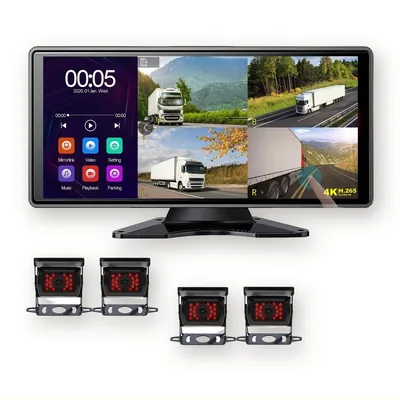
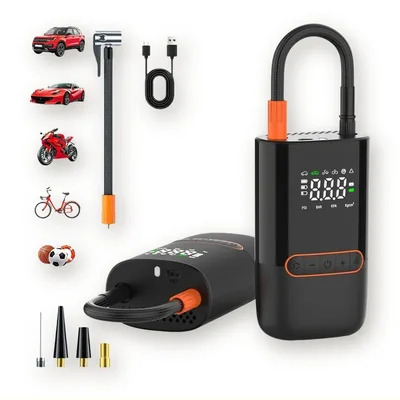
Regulation (EU) 2023/988, the General Product Safety Regulation, sets the general safety rules for consumer products in the EU. It applies to products that consumers buy or are likely to use, which covers nearly every car accessory: seat covers, mats, organisers, phone mounts, chargers, dash cams, inflators, jacks sold to drivers and hand tool sets sold in DIY shops.
Products sold only to professionals, such as a two-post lift, are mainly governed by other rules, but many workshop items are also sold to consumers and should be labelled as consumer products. Where specific EU legislation such as the radio, EMC or machinery rules covers a risk, the GPSR fills the gaps around it.
The EU economic operator
A product can only be placed on the EU market if there is an economic operator established in the EU responsible for it: the manufacturer, the importer, an authorised representative or a fulfilment service provider. For factory-direct goods, that is usually the importer. When you buy from us, we act as the importer. When you import yourself, the role and its duties are yours. Importers have their own obligations under Article 11, including checking that the manufacturer has done its part.
What must be on the product or packaging
- Type, batch or serial number, or another element that identifies the product.
- Manufacturer: name, registered trade name or trade mark, postal address and an electronic address such as e-mail or website.
- Importer (if the manufacturer is outside the EU): name, trade name or trade mark, postal and electronic address.
- Warnings and safety information in a language easily understood by consumers in the country of sale.
- Instructions where needed for safe use, also in that language.
Where the size or nature of the product does not allow it, the information can go on the packaging or an accompanying document. Small items such as phone mounts or socket sets often carry the data on the box.
Category by category
| Product group | Typical warnings and instructions | Other rules that add marking |
|---|---|---|
| Seat covers | Side airbag seams, fitting instructions | Textile fibre labelling; REACH for leather and PU |
| Floor mats and boot liners | Fit under pedals, fixing to the floor | REACH for PVC and rubber |
| Phone mounts | Mounting position, field of view, heat | RED if wireless charging |
| Chargers, FM transmitters | Voltage, socket, heat | CE, WEEE |
| Dash cams | Mounting, heat, local recording rules | CE, WEEE, batteries |
| Tyre inflators | Pressure, duty cycle, charging | CE, WEEE, batteries |
| Jacks and axle stands | Rated capacity, never work under a jack alone | Machinery rules, EN 1494 |
| Car kettles | 12/24 V only, hot water | Food contact (EC) No 1935/2004 |
Phone mounts, for example, should tell the user not to mount the phone where it blocks the view of the road or the deployment area of an airbag. Seat covers should explain how they work with side airbags in the seats. These are practical warnings, not claims about safety.
Languages
Warnings and instructions must be in a language the consumer in the country of sale easily understands, as set by national law. A seller in Germany, Austria and Switzerland can often use one language, while a seller covering Poland, the Netherlands and France needs three. Multilingual labels and manuals are part of our private label service.
Private label: whose name goes on the label
When a product carries your brand, the label has to show who is responsible for it. If you place it on the market under your own name or trade mark, you are treated as the manufacturer and your name and address appear as such. The importer’s details still go on the product or box when the goods come from outside the EU. Agree this split before the artwork is drawn, because changing a printed box after production is expensive. Leave space on the box for the batch number, which is usually printed or stickered at the end of the line.
The same data online
The GPSR also covers distance sales. Every online offer must show clearly and visibly:
- the manufacturer’s name, postal and electronic address;
- the EU responsible person’s name and address, where the manufacturer is outside the EU;
- information to identify the product, including a picture, type and other identifier;
- warnings and safety information in the language of the country of sale.
Marketplaces have added fields for this data and may block listings without it. Gather the information per model before the stock arrives. Our page for online sellers explains what we provide with each product.
Other marks that often travel with GPSR data
- CE mark for electronics, battery products, power tools, compressors and lifting equipment.
- Crossed-out bin symbol for WEEE and batteries.
- Textile fibre composition for seat covers and workwear under Regulation (EU) No 1007/2011.
- Packaging recycling and producer responsibility marks where national rules require them, such as Triman in France.
- EAN barcode, which is a trade requirement rather than a legal one.
Traceability and records
The GPSR expects economic operators to be able to identify their suppliers and business customers, and to keep technical documentation and risk analysis available. For a buyer, that means a file per model: specification, photos of the approved sample, labels, manuals, declarations and test reports. When a market authority asks questions, the batch number on the product should lead straight to that file.
Accidents, recalls and complaints
Operators must take action if a product turns out to be dangerous, inform authorities through the Safety Business Gateway where required and handle consumer complaints. Keep a simple complaint log per product. It also tells you early which models to improve or drop.
Common labelling mistakes
- An address only in a foreign script or with no electronic contact.
- Warnings in English only for a product sold in Poland or Italy.
- A batch number on the carton but not on the retail box.
- A private-label brand that hides the importer’s details.
- Online listings with a product photo but no manufacturer or EU operator details.
How we handle it
As the importer of the goods we sell, we act as the EU economic operator, request the manufacturer’s documents where they exist and check labels at pre-shipment inspection. For private label we agree who appears on the label as manufacturer and importer before artwork is approved.