1. Start from your channel and your season
An accessory shop needs breadth in small quantities. An online seller needs a handful of products under one brand. A garage needs tools and consumables for a fixed number of bays. A fleet needs the same dash cam or mat set in every vehicle. Write down the retail or internal price you aim for, the quantity you can use or sell in one season and the countries you sell in.
Then check the calendar. The winter range of inflators, chargers, seat covers, mats and work lights should be in the shop by October. Tyre-change peaks in March–April and October–November drive demand for jacks, axle stands and impact wrenches. Phone mounts, dash cams and cleaning products sell from spring. Our how it works page shows the order dates that follow from this.
2. Find manufacturers, not only listings
Factory marketplaces show many near-identical offers, and plenty come from trading companies. Ask for the business licence, the company’s age and export history, and a video call from the production floor. If you plan to put your brand on a dash cam or a mat set, you want the factory that makes it.
Specialisation matters. A plant that injection-moulds phone mounts rarely builds hydraulic jacks, and a seat cover workshop does not assemble electronics. Expect to work with several partner factories for a full range of accessories and garage tools.
3. Compare quotes on delivered cost
Send each supplier the same specification and ask for:
- price per piece or set, and the MOQ for each model and colour;
- packaging type, inner pack quantity and carton size;
- gross weight per carton, or per pallet for heavy items;
- production time, payment terms and the documents available.
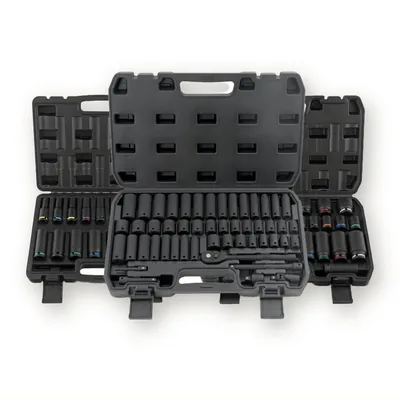
Carton data often matters more than the unit price. Boot liners and organisers take volume. Socket sets, jacks and axle stands are dense and heavy. Lifts, compressors and tool cabinets travel on pallets and are best quoted delivered. A low unit price can turn into a high delivered cost once freight is added.
4. Sample the way your customers will use the product
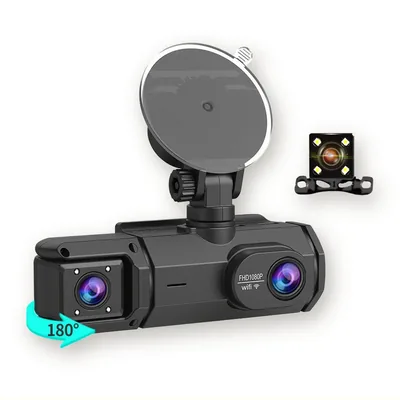
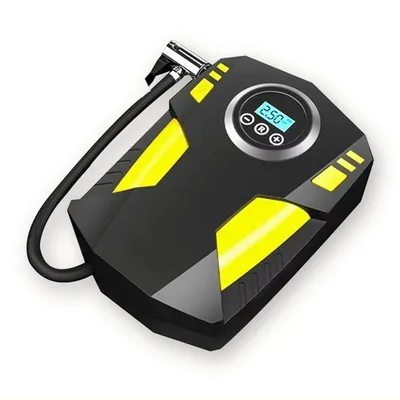
Fit the universal seat cover set on two or three different cars and check the airbag seams and fastening. Mount the phone holder on a vent and drive over a rough road. Record day and night footage on the dash cam, then check the file format and the app. Run the tyre inflator against a gauge you trust. Lift a load well within the rating on the trolley jack and check the release valve.
Keep one approved sample as the reference for production and inspection. Sample costs are credited against the order.
5. Agree terms in writing
The contract should hold the specification, packaging, labels, delivery date and quality standard. If your logo goes on a mat, a box or the start-up screen of a head unit, approve a pre-production sample before mass production. A typical split is a deposit of 30–50 % with the balance before shipment.
6. Inspect before the goods leave
Fixing a problem after arrival is slow and costly. A pre-shipment inspection checks quantity, workmanship, function, packaging and labels on a statistical sample (AQL). For car products that means power-on and recording tests for electronics, socket fit and finish on tool sets, stitching on covers, edge trimming on mats and a functional check on jacks. Pay the balance after you have seen the report. More detail is on our quality page.
7. Choose the transport
Sea freight usually suits bulky and heavy goods such as mats, cabinets and compressors. Rail is a middle route for mixed orders, and air is for samples and urgent light goods. Planning figures are 25–45 days by rail or sea to Poland and 7–12 days by air.
Lithium-battery products such as cordless inflators, power tools and some dash cams ship under dangerous-goods rules. The manufacturer must supply a UN38.3 test summary, and not every air route takes them. Allow for space filling up before the factory holidays in late January–February, which stop production for several weeks.
8. Customs, duty and VAT
The importer of record files the import declaration, pays duty according to the tariff code and pays import VAT. You also need an EORI number. Duty differs between electronics, textiles, rubber mats and hand tools, so check the code for each item before you calculate your margin.
9. Make the product legal to sell
Under the GPSR (Regulation (EU) 2023/988) every consumer product needs an EU economic operator, a name and postal address on the product or packaging, a type or batch reference and warnings in the language of the country of sale. Beyond that:
- electronics need CE marking under the EMC and RoHS directives, plus the Radio Equipment Directive for anything with Wi-Fi, Bluetooth, GPS or FM;
- electrical products need WEEE registration in each country of sale;
- battery products fall under the Batteries Regulation (EU) 2023/1542;
- rubber and PVC parts are checked for PAH and phthalates under REACH;
- power tools, compressors and lifts come under the machinery rules.
Common mistakes buyers make
- Ordering by the photo. Two dash cams with the same listing can use different image sensors and firmware. Ask for the sensor, chipset, resolution per channel and storage format.
- Trusting “universal”. Universal products fit most cars, not all. Test on the vehicles your customers drive and say so honestly in the listing.
- Skipping the language question. A shop selling in Germany, Poland and France needs warnings and manuals in three languages.
- Mixing seasons. Winter inflators and summer phone mounts sell at opposite ends of the year. Splitting the order across two shipments often helps cash flow.
- Late private label. Logo work needs artwork approval, a pre-production sample and then production. For spring stock, start by mid-December.
A simple ordering plan
Many buyers use three steps. First, buy catalogue products in small quantities to test demand and quality. Second, repeat the best sellers with your logo on the box or the product. Third, add products made to your own specification. Our pricing page explains how prices step down with quantity.
Keep a file for each model: specification, approved sample photo, price, MOQ, carton data and compliance documents. When a customer or market authority asks questions two years later, that file saves days of searching.
10. The alternative: buy through an EU importer
If you would rather not be the importer, buy through one. You get an EU invoice, inspected goods, a delivered price and the manufacturer’s documents where they exist. Car accessories and garage tools can go in one mixed pallet. That is what we do at GaragiQ. Send us your product list and compare our offer with your own calculation.